
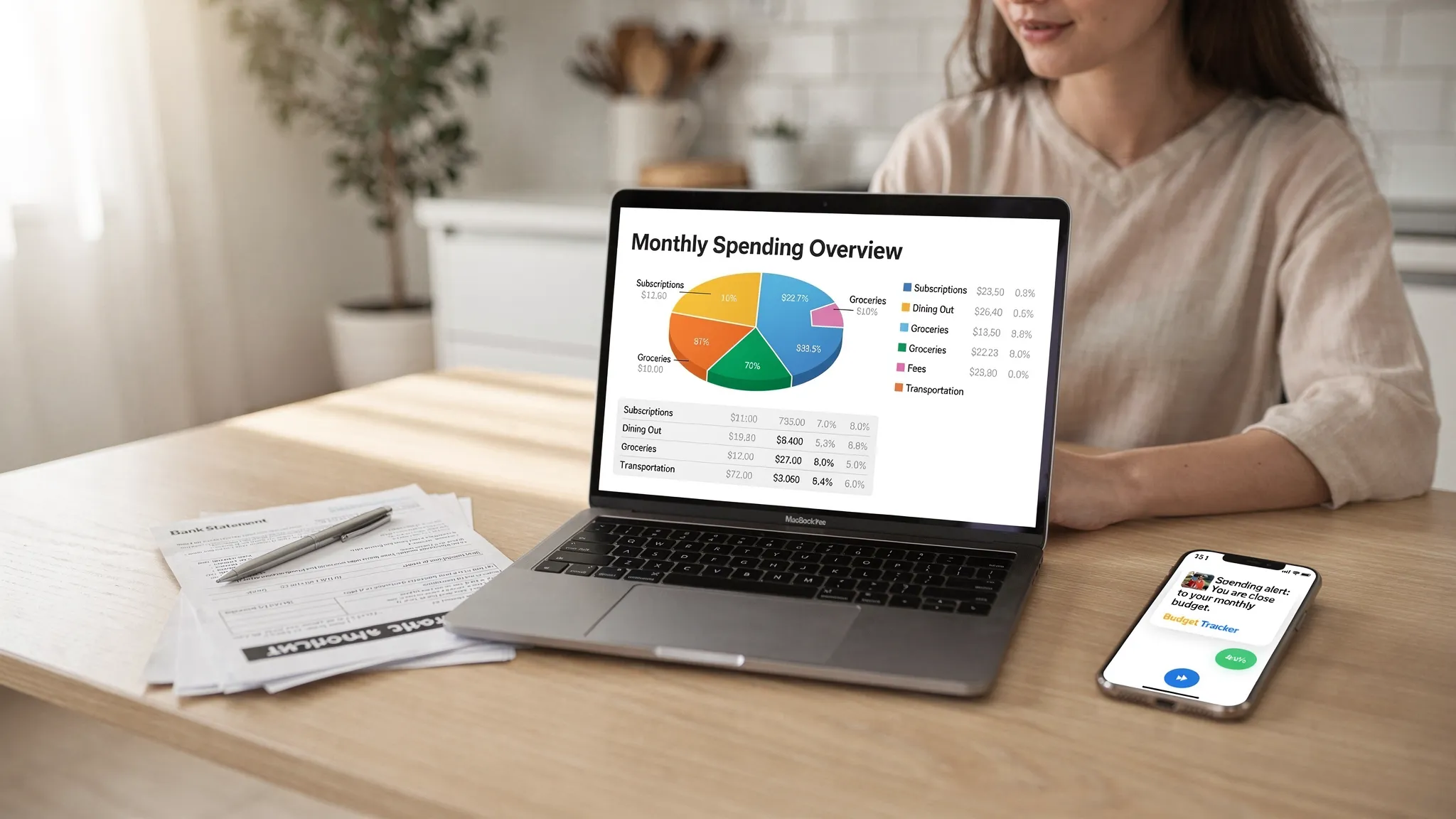
Most people don’t have a spending problem, they have a visibility problem. When every purchase blurs together, it’s hard to know what to fix first. A personal spending tracker changes that by turning transactions into categories, and the right categories can reveal “fast wins” within days, not months.
Fast wins are cuts you can make quickly, with low disruption, and measurable impact. They usually come from recurring charges, common overspends, avoidable fees, and duplicate services. Below are the spending categories that tend to surface those opportunities the fastest, plus exactly what to look for in your tracker.
What “fast wins” look like inside a personal spending tracker
A spending category is a fast win when it meets at least one of these conditions:
- Recurring (monthly or annual charges you can cancel or downgrade)
- High frequency (lots of small purchases that add up)
- Fee-driven (penalties you can often avoid with alerts and timing)
- Price-flexible (you can switch providers or plans without changing your lifestyle)
This is where a personal spending tracker earns its keep. When transactions are categorized and searchable, you can quickly answer questions like:
- “What subscriptions hit my account in the last 90 days?”
- “How much did I spend on food delivery vs groceries?”
- “Which fees happened, and when?”
If you use an app like MoneyPatrol (free personal finance and budgeting with expense categorization, alerts, bills, and reporting), you can review categories, monitor changes over time, and set reminders and alerts so the improvements stick.
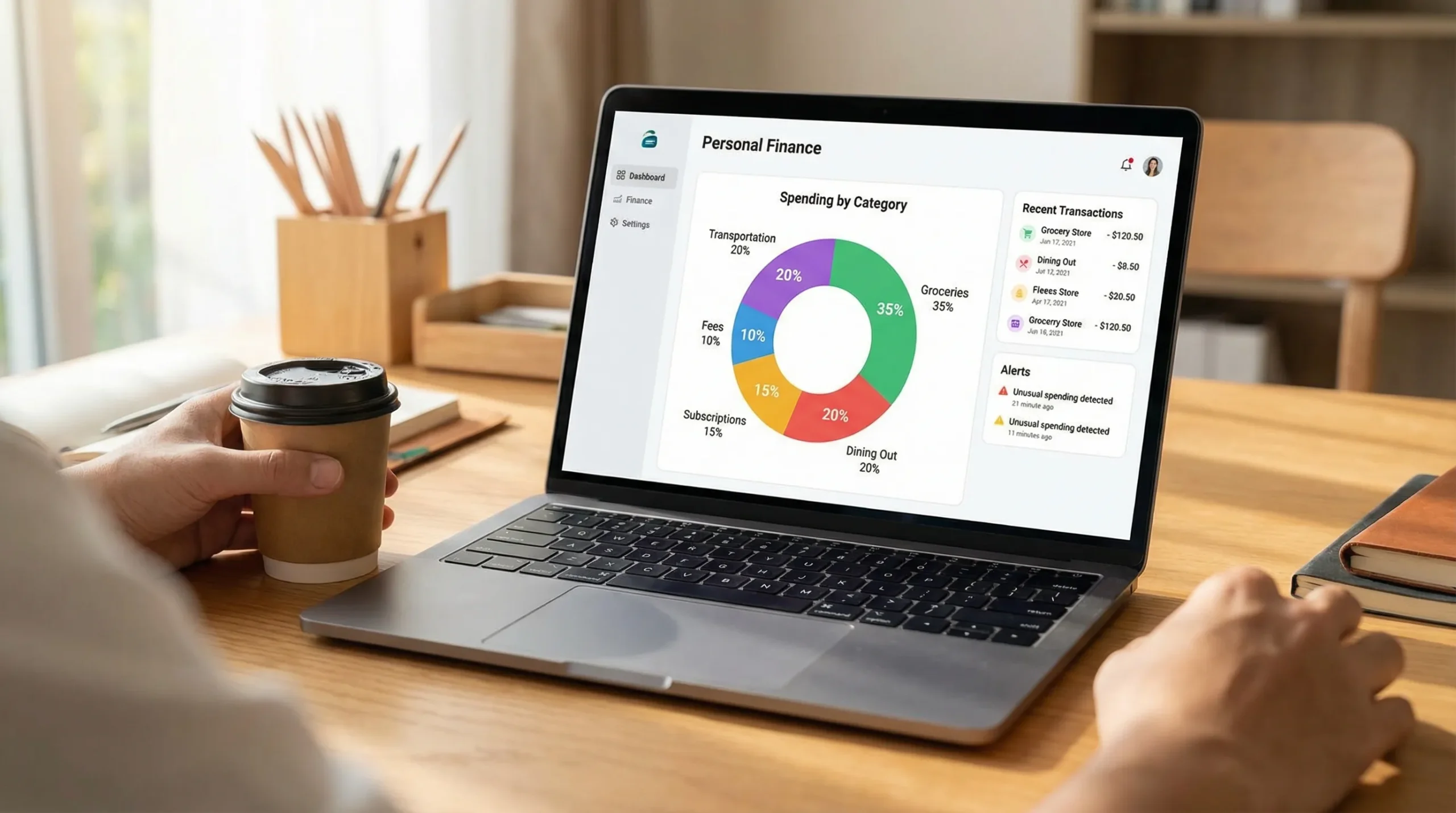
The categories that most often reveal quick savings
The list below is ordered by how often it produces quick, low-friction savings for typical households.
1) Subscriptions and memberships (the #1 fast win category)
Subscription creep is common because charges are:
- Small enough to ignore
- Recurring automatically
- Spread across multiple merchants (and sometimes multiple cards)
What to look for in your tracker
- Multiple streaming services with overlapping use
- Trials that converted to paid plans
- Annual renewals you forgot about
- Duplicate services (music, cloud storage, fitness apps)
Fast win moves
Cancel anything unused, downgrade “premium” tiers, and standardize renewal timing. A good goal is to reduce subscriptions to the handful you actively use weekly.
2) Dining out and delivery (high frequency, high markups)
This category is a fast win because you don’t need perfection to see results. Cutting just a few orders per month often produces immediate savings.
What to look for in your tracker
- A pattern of purchases clustered on busy days (often a planning issue, not a willpower issue)
- Delivery fees and service charges embedded in transactions
- Multiple small charges in one day (coffee, snacks, lunch)
Fast win moves
Set a weekly “food away from home” target and use alerts when you hit 75% of it. The Bureau of Labor Statistics Consumer Expenditure Survey consistently shows food spending is a major household line item, and eating out is the portion most people can adjust quickly.
3) Groceries (where “small” changes compound)
Groceries are essential, but they’re also one of the easiest categories to “quietly” overspend in because prices fluctuate and baskets change weekly.
What to look for in your tracker
- Grocery spending that spikes in weeks with extra store trips
- Convenience purchases that belong in a different mental bucket (prepared meals, single-serve drinks)
- Warehouse club costs that exceed the value you’re actually getting
Fast win moves
Try a two-week experiment: reduce store trips, buy fewer prepared items, and track the delta. Your tracker’s category trend will show whether the change is real.
4) Bank fees (late fees, overdrafts, ATM fees)
Fees are one of the cleanest fast wins because they provide zero value. If you see even a few a month, you likely have a fixable workflow issue.
What to look for in your tracker
- Overdraft and NSF fees
- ATM fees (especially out-of-network)
- Monthly account maintenance fees
Fast win moves
Use bill reminders and low-balance alerts to avoid timing-related fees. If your tracker supports alerts and reminders (MoneyPatrol includes customizable alerts and reminders), set them for:
- Minimum checking balance
- Upcoming bill due dates
- Large transactions
For general guidance on avoiding common banking fees, the CFPB publishes practical consumer resources.
5) Interest charges (especially credit cards)
Interest is often the biggest “silent” expense, and tracking it as its own category (or subcategory) can be eye-opening.
What to look for in your tracker
- Credit card interest charges that recur monthly
- Rising interest totals alongside stable spending (often a payoff timing issue)
- Balance transfer fees (a one-time hit that should be planned)
Fast win moves
Even small extra payments can reduce total interest over time. The key “fast win” is separating spending from financing cost so you can measure progress. If your tool tracks bills and debt, add reminders for payment dates and consider aligning paydown with your cash flow.
6) Utilities (quick wins via plan settings and leak detection)
Utilities are not always instantly reducible, but they often have quick fixes that show up within 1 to 2 billing cycles.
What to look for in your tracker
- Month-over-month spikes (seasonality is normal, sudden jumps may not be)
- Add-on services (equipment rental, protection plans) bundled into the bill
Fast win moves
Call to remove add-ons you do not need, adjust plan tiers where possible, and track whether the next bill drops. Your personal spending tracker’s monthly comparison report is ideal for validating the impact.
7) Insurance premiums (fast wins through shopping, not skipping)
Insurance can be a meaningful savings lever when you shop rates or adjust deductibles, but it requires care. You want lower cost for the same protection, not gaps.
What to look for in your tracker
- Premium increases at renewal
- Separate policies that could be bundled (auto + renters/home)
Fast win moves
Set a calendar reminder 3 to 4 weeks before renewal to shop rates. Track premium changes year-over-year so you can see whether switching actually paid off.
8) Shopping and “miscellaneous” (the category that hides everything)
A large “shopping” or “miscellaneous” bucket is often a sign your categories are too broad. It’s hard to cut what you can’t name.
What to look for in your tracker
- Big catch-all categories with no clear story
- Recurring purchases that should be reclassified (for example, pet supplies, baby supplies)
Fast win moves
Split broad categories into a few meaningful ones you’ll actually manage. The goal is not to create dozens of micro-categories, it’s to isolate the 2 to 4 shopping areas where overspending happens.
9) Transportation (fuel, rideshare, parking, tolls)
Transportation is often a top expense area for households, along with housing, per consumer spending data tracked by the BLS. While big changes (like selling a car) are not “fast,” many smaller transportation costs are.
What to look for in your tracker
- Parking and tolls that cluster around certain days or locations
- Rideshare spending that jumps during travel or busy work weeks
- Gas station convenience purchases inflating the category
Fast win moves
Tighten the “last-mile” costs (parking, rideshare, tolls) first. These are typically easier to reduce than commuting distance.
10) Cash withdrawals (a “blind spot” category)
Cash is not automatically bad, but it often becomes untracked spending. In many trackers, the withdrawal is categorized, but the downstream cash use is not.
What to look for in your tracker
- Frequent ATM withdrawals
- A pattern of withdrawals right before budget overruns elsewhere
Fast win moves
Treat cash as its own envelope category and set a weekly limit. If you keep using cash, log it consistently so you do not underestimate your real spending.
A practical “fast wins” review (15 minutes, once a week)
A weekly review is enough to keep spending under control without turning budgeting into a second job.
Step 1: Sort by “last 30 days” and scan for surprises
Use your personal spending tracker to filter transactions to the last month, then scan for:
- Merchants you don’t recognize
- Duplicate charges
- Price increases on recurring bills
If your tracker supports account reconciliation (MoneyPatrol includes reconciliation), use it to confirm what cleared versus what is pending.
Step 2: Run a category comparison
Compare the last 30 days to the previous 30 days and flag categories that:
- Increased meaningfully
- Have lots of small transactions
- Contain fees or interest
Step 3: Pick one change to test for 7 days
Fast wins work best as short experiments. Pick one:
- Cancel one subscription
- Reduce dining out by two meals
- Eliminate ATM fees for a week
Then let your tracker confirm the result.
Use categories to drive automation (alerts, reminders, and guardrails)
Categories only create savings if they change behavior. Automation helps.
If your tracker supports customizable alerts and reminders (MoneyPatrol does), the most useful ones for fast wins are:
- Category threshold alerts (notify when dining out, shopping, or groceries hit a limit)
- Upcoming bill reminders (reduce late fees and credit dings)
- Large transaction alerts (catch mistakes and fraud early)
The point is to shift from “review and regret” to “notice and adjust.”
Cheat sheet: categories and the specific signals to watch
| Category | Fast win signal | What to do next | How a tracker helps |
|---|---|---|---|
| Subscriptions | Charges you forgot, duplicates, annual renewals | Cancel or downgrade, consolidate services | Find recurring merchants, review monthly totals |
| Dining out / delivery | Many small charges, high fees, weekday spikes | Set weekly limit, plan 2 quick meals | Category budgets, threshold alerts |
| Groceries | Extra trips, rising weekly average | Reduce trips, swap convenience items | Trend charts and month comparisons |
| Fees | Overdraft, ATM, maintenance fees | Add alerts, adjust timing, avoid out-of-network | Alerts, bill reminders, transaction filtering |
| Interest | Monthly finance charges | Increase payoff, track interest separately | Reporting that isolates interest totals |
| Utilities | Unexplained spikes, add-ons | Remove add-ons, monitor next bill | Month-over-month category reports |
| Insurance | Renewal increases | Shop rates before renewal | Year-over-year comparisons |
| Shopping / misc | Category too broad to manage | Split into a few meaningful buckets | Better categorization, clearer reports |
| Transportation | Parking/tolls/rideshare creep | Target last-mile costs first | Weekly category totals |
| Cash withdrawals | Frequent withdrawals mask real spend | Set a weekly cash cap | Track withdrawal totals and patterns |
Turning insights into a simple plan that sticks
If you want fast wins, avoid starting with the biggest categories (like housing) unless there’s an obvious issue. Start with the categories where:
- You can act in minutes
- The change is reversible
- Results show up on your next statement
That is why subscriptions, dining out, fees, and interest are so powerful. They are visible, measurable, and usually fixable without a lifestyle overhaul.
When your personal spending tracker is connected to your accounts, categorizes transactions, and provides reports and alerts, you can move from guessing to managing. If you want an all-in-one place to track spending, bills, budgets, and accounts, you can start with MoneyPatrol and focus your first week on the fast-win categories above.


 Our users have reported an average of $5K+ positive impact on their personal finances
