

Most people download finance tracking apps to “see where the money went.” That is useful, but it is also the fastest way to stall out. Expenses are only one slice of your financial picture.
If you want the app to actually change your outcomes (less stress, fewer late fees, more savings, faster debt payoff), you need to track a handful of high leverage signals that explain why your spending looks the way it does and what will happen next.
Below are the most important things to track beyond expenses, plus how to review them quickly so the data turns into decisions.
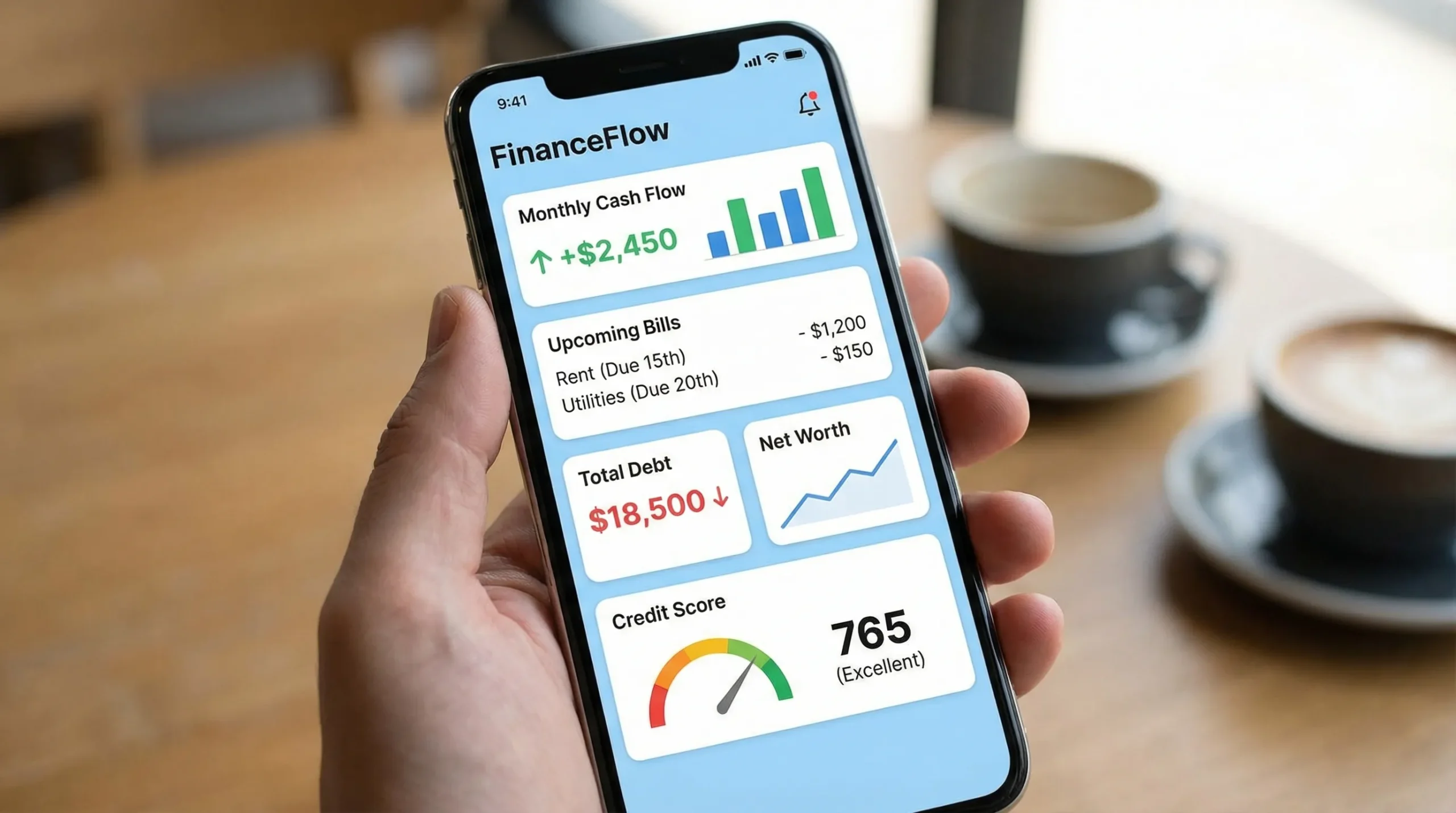
1) Cash flow (income vs outflow), not just a budget
A budget is a plan. Cash flow is reality. Tracking cash flow answers questions expenses alone cannot:
- Are you consistently running a surplus, even if you “feel” broke?
- Are you saving because you planned to, or because you got lucky this month?
- Which weeks are tight due to paycheck timing?
What to track:
- Net income (after tax and benefits)
- Total outflow (expenses + debt payments)
- Monthly surplus or deficit
- Paycheck dates vs bill dates (timing matters as much as totals)
A simple rule: if your budget looks fine but cash flow is negative, you either have timing issues (bills due before paydays) or underestimated irregular costs (annual subscriptions, car repairs, medical, travel).
2) Bills and due dates (late fees are 100% avoidable)
Bills are “fixed” until they are not. Rent can increase, insurance renewals can spike, and subscription trials quietly convert.
Tracking bills goes beyond the amount. It includes:
- Due date
- Autopay status (on or off)
- Last paid date and confirmation
- Bill changes over time (increases are a key signal)
This is where alerts and reminders matter most. A $30 late fee or a penalty APR is not a budgeting problem, it is a system problem.
3) Debt payoff progress (principal vs interest)
Many people track the payment and miss the point: how much of that payment reduced the balance.
What to track:
- Balance by debt (credit cards, student loans, auto loans, personal loans)
- Interest rate (APR)
- Minimum payment
- Principal paid this month
- Interest paid this month
Why it matters: interest is a “leak” that competes with your savings goals. Seeing principal vs interest can also keep you motivated because it proves your payments are actually moving the needle.
If you want one extra metric that is surprisingly powerful, track your debt free date estimate (even a rough one) and update it monthly.
4) Net worth (the scoreboard that ties everything together)
Expenses tell you what happened. Net worth tells you if your decisions are working.
Net worth = (cash + investments + assets) minus (credit cards + loans + other liabilities).
Even if you never owned a home or a business, net worth is still the best single number for long term progress because it captures:
- Your savings habit
- Your debt reduction
- Your investing consistency
A practical approach: track net worth monthly (not daily). Daily fluctuations in investments can distract you from the behaviors that matter.
5) Savings rate and emergency fund runway
People often say “I want to save more” but they do not measure it.
Two metrics make saving concrete:
Savings rate
Savings rate = (money saved or invested) divided by (net income).
Why it matters: savings rate is a behavior metric you can control, unlike market returns.
Emergency fund runway
Runway = emergency fund divided by essential monthly costs.
This is more informative than a raw dollar amount because it adapts to your lifestyle and obligations. The goal is not perfection, it is resilience.
6) Subscriptions and recurring charges (the silent budget killers)
Recurring charges are easy to ignore because each one is “small,” but together they can rival a major bill.
What to track:
- Subscription name and monthly or annual cost
- Renewal date
- Whether it is still used
- Price changes (especially after intro periods)
A useful monthly habit: review recurring charges and cancel or downgrade one item. That single action often funds a meaningful goal (extra debt payment, investing, sinking fund).
7) Credit score drivers (focus on the levers, not the number)
A credit score is not just for getting a mortgage someday. It can affect approvals, rates, deposits, and sometimes even insurance pricing depending on state and insurer.
Instead of obsessing over the score, track the drivers you can influence. According to myFICO’s explanation of score factors, the biggest categories include payment history and amounts owed (often discussed as utilization).
What to track:
- On time payment streak (especially for credit cards and loans)
- Credit utilization (overall and per card)
- Number of open accounts and average age
- Hard inquiries (when you apply for new credit)
Practical takeaway: if you pay on time and keep utilization low, you are doing the highest impact work.
8) Fees, interest, and “money leaks”
Not all outflows are equal. Some expenses buy value. Others are pure friction.
Track these separately so they stand out:
- Bank fees
- Overdraft fees
- Credit card interest
- Loan interest
- ATM fees
- Late fees
If you can reduce leaks, you often “find money” without cutting things you enjoy.
9) Category trends (direction matters more than precision)
Expense tracking becomes powerful when you stop arguing with categories and start watching trends.
Examples:
- Grocery spend trending up 15% over three months
- Dining out dropping steadily since you started meal planning
- Transportation costs spiking due to parking, tolls, rideshare
Trends help you decide what to change. They also help you forecast: if a category is rising, your next month is already in danger before it starts.
10) Financial goals (with milestones, not wishes)
Goals are where tracking turns into motivation.
Good goals in finance tracking apps have:
- A target number
- A target date
- A current balance
- A monthly contribution plan
Common goal buckets:
- Emergency fund
- Vacation or travel
- Down payment
- Taxes (especially for freelancers)
- Car replacement or home repairs
This is also where “sinking funds” shine: smaller goals with dedicated balances that prevent surprise expenses from wrecking your month.
What to track, at a glance
Use this table to decide what to add to your dashboard first.
| What to track | Why it matters | How often to review | What “good” looks like |
|---|---|---|---|
| Cash flow surplus/deficit | Predicts whether your plan is sustainable | Weekly + monthly | Surplus most months |
| Bills and due dates | Prevents late fees and missed payments | Weekly | Nothing overdue, no surprises |
| Debt principal vs interest | Speeds payoff and highlights costly balances | Monthly | Principal is consistently dropping |
| Net worth | Measures overall progress across saving, debt, investing | Monthly | Upward trend over time |
| Savings rate | Tells you how much progress you are buying each month | Monthly | Rising gradually, consistent |
| Emergency fund runway | Builds resilience to job loss and shocks | Monthly | Increasing runway |
| Subscriptions/recurring | Eliminates waste and prevents renewals | Monthly | Only active, intentional subscriptions |
| Credit utilization + on time payments | Improves borrowing costs and approval odds | Monthly | On time, low utilization |
| Fees and interest | Identifies “leaks” you can plug quickly | Monthly | Trending downward |
A simple monthly review that takes 15 minutes
You do not need perfect spreadsheets. You need a short routine.
Step 1: Check upcoming bills and cash timing
Look at what is due before your next paycheck. If timing is tight, move a due date (many lenders allow it) or adjust autopay settings.
Step 2: Review cash flow and one trend
Confirm whether you ran a surplus. Then pick one category trend to investigate (groceries, dining, subscriptions, transportation).
Step 3: Make one “move”
Choose one action:
- Make an extra debt payment
- Transfer to a goal or emergency fund
- Cancel or downgrade one recurring charge
- Set an alert for a risky category
Step 4: Update net worth (once)
Monthly is enough. This keeps the focus on progress, not noise.

How to choose finance tracking apps that support more than expense tracking
When comparing finance tracking apps, look for support for the “beyond expenses” layers:
- A unified dashboard across accounts (so cash flow and net worth are visible)
- Budgeting plus reporting (so you can see trends, not just totals)
- Bill and debt tracking (so due dates and balances are central)
- Alerts and reminders (so you catch issues before they cost you)
- Investment tracking and credit monitoring (so long term progress is connected to day to day behavior)
MoneyPatrol is built around this broader view, combining expense tracking, budgeting tools, bill and debt tracking, income management, investment tracking, credit score monitoring, alerts, reconciliation, and detailed reports in one place.
Frequently Asked Questions
What should I track first if I am new to finance tracking apps? Start with cash flow and bills. Knowing what is due and whether you are running a surplus prevents late fees and reduces stress fast.
Is tracking net worth worth it if I have debt? Yes. Net worth includes debt, so it shows your real progress as balances drop and savings grow.
How often should I review my finances in an app? A quick weekly check for bills and cash timing, plus a monthly review for trends, net worth, and goal progress is enough for most people.
Do I need to track every transaction perfectly? No. Aim for consistency and trend visibility. A system that you use beats a perfect system you abandon.
What is more important: budgeting or tracking? They work together. Budgeting sets the plan, tracking shows what is actually happening, and the gap between them is where you improve.
Build a complete picture with MoneyPatrol
If you want finance tracking that goes beyond categorizing expenses, try MoneyPatrol’s free personal finance dashboard to monitor spending, bills, debt, income, investments, credit score, and progress toward goals in one place.
Explore the platform on the MoneyPatrol website or see why it is positioned as a free budgeting app.



 Our users have reported an average of $5K+ positive impact on their personal finances
