
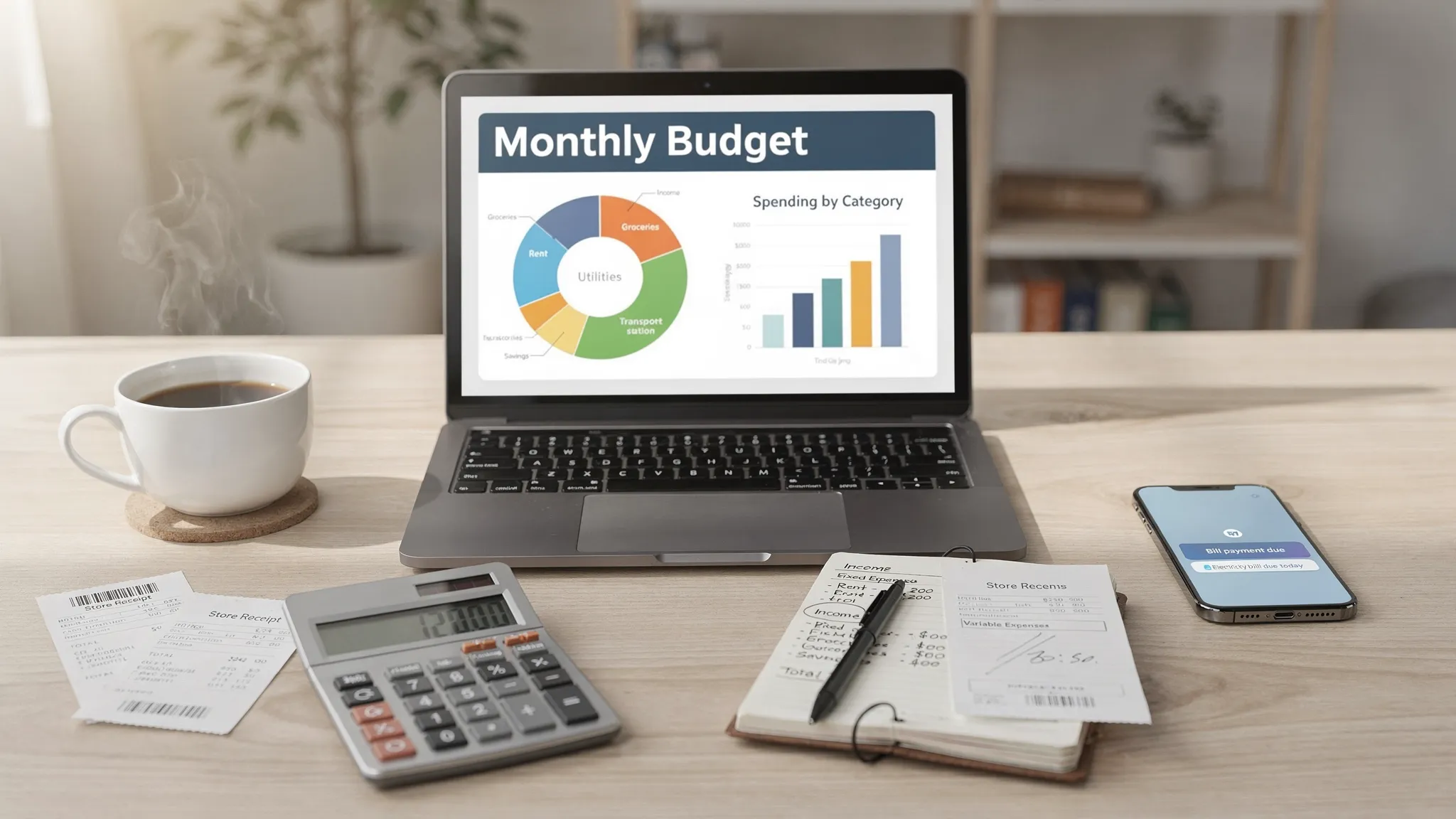
Most budgets fail for one simple reason: they look good on paper, but they do not match how you actually spend, get paid, and pay bills. The best budget planner is not a fancy spreadsheet or a trendy method. It is a system that helps you decide, ahead of time, where your money will go this month, then makes it easy to follow through.
Below is a practical, month-by-month approach you can repeat (and improve) in under an hour, even if your income varies or your expenses are unpredictable.
What “best budget planner” really means (it is a workflow, not a template)
A budget planner is “best” if it consistently answers four questions:
- What do I have to work with this month? (net income plus any planned cash buffer)
- What must be paid, and when? (rent/mortgage, utilities, minimum debt payments, insurance)
- What do I want this month to achieve? (saving, debt payoff, a specific goal)
- How will I track reality vs plan without effort? (categories, alerts, and a simple review rhythm)
If your current approach breaks down mid-month, it is usually because one of these is missing:
- You planned with gross income instead of take-home pay
- You forgot irregular expenses (annual subscriptions, car registration, back-to-school, gifts)
- Your “fun money” is too strict, so you quit tracking
- You only look at the budget after overspending
A strong monthly plan solves these problems upfront.
Step 1: Pick a budgeting style you can stick to
Different “styles” work better for different lives. Choose one default style and run it for 2 to 3 months before switching.
| Budgeting style | Best for | How it works | Common pitfall |
|---|---|---|---|
| 50/30/20 (guideline) | Beginners who need structure fast | Rough targets for needs, wants, savings/debt | Categories can be too broad if bills are tight |
| Zero-based (every dollar assigned) | People who want precision and control | Income minus planned expenses equals zero | Can feel “too strict” without buffers |
| Pay-yourself-first | People rebuilding savings consistency | Auto-allocate savings/debt first, spend the rest | Can hide overspending if tracking is weak |
| “Bills first” cashflow plan | People paid weekly/biweekly | Focus on due dates and pay cycles | Easy to ignore long-term goals |
If you want a simple starting point, the CFPB’s budgeting guidance is a solid baseline to adapt to your situation, especially for needs vs wants framing. You can review it on the Consumer Financial Protection Bureau.
Step 2: Do a 20-minute pre-month setup (this is where follow-through is won)
Do this 2 to 5 days before the new month starts.
Start with “known money”: your net income
Use expected take-home pay, not gross.
- If you are salaried, use your normal monthly net income.
- If your income varies, use a conservative base (for example, the average of your lowest 3 months from the last year) and treat any extra as a bonus allocation later.
List your non-negotiables and due dates
These are the expenses that create chaos if you miss them:
- Housing
- Utilities
- Insurance
- Minimum debt payments
- Childcare
- Transportation (including fuel)
The goal is not just amounts. It is timing. A budget you can follow is also a cashflow plan.
Add sinking funds for irregular expenses
Irregular expenses are predictable, just not monthly. Turn them into a monthly line item.
Examples:
- Annual subscriptions (divide by 12)
- Car maintenance (a monthly average)
- Holidays and gifts
- Medical and dental out-of-pocket
If you do only one thing to make your plan realistic, do this.
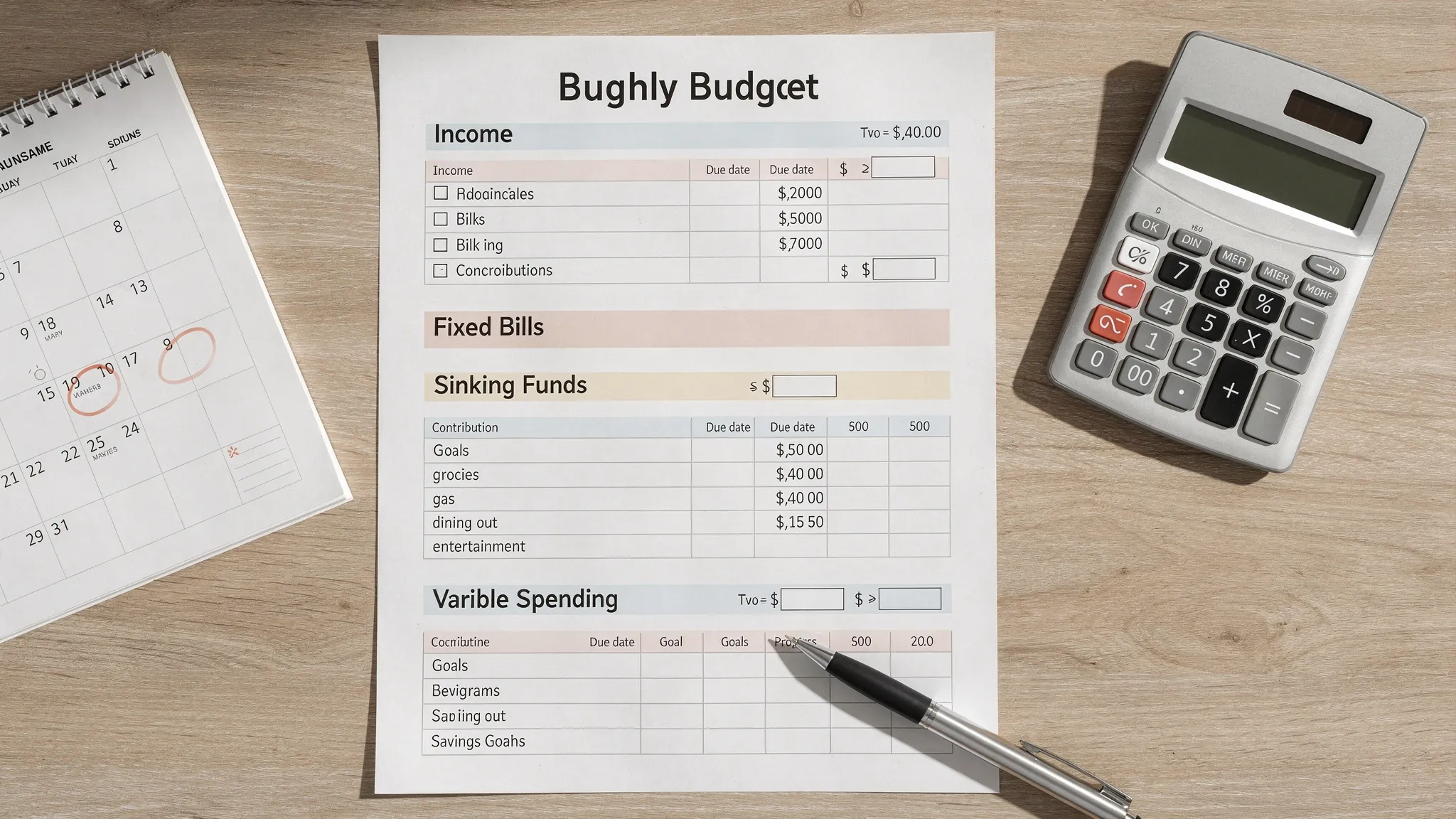
Step 3: Build a “followable” monthly budget in 3 layers
Think in layers, so you do not over-optimize too early.
Layer A: Keep the lights on
Fund essentials first. If these are unstable, everything else collapses.
Layer B: Protect the month (buffers and true expenses)
Include:
- Sinking funds (true expenses)
- A small buffer category (for unexpected costs)
Even a modest buffer reduces the need to “break” the budget mid-month.
Layer C: Make progress (goals that matter)
Pick one or two goals per month:
- Emergency fund
- Debt payoff above minimums
- Retirement contributions
- A specific goal (trip, down payment, new laptop)
Progress is what makes budgeting feel rewarding.
A realistic example: a monthly plan you can actually follow
Here is a sample budget using a $4,500 monthly net income. The exact percentages will vary, but the structure is what matters.
| Category | Planned amount | Why it’s here |
|---|---|---|
| Housing | $1,650 | Fixed, must-pay |
| Utilities + internet + phone | $300 | Fixed-ish, must-pay |
| Insurance (health/auto/renters) | $250 | Fixed, must-pay |
| Minimum debt payments | $350 | Fixed, must-pay |
| Groceries | $450 | Variable, essential |
| Transportation (fuel/transit) | $250 | Variable, essential |
| Sinking funds (annual + irregular) | $250 | Turns surprises into plans |
| Buffer (unexpected) | $150 | Prevents budget “breakage” |
| Dining/entertainment | $250 | Keeps the budget livable |
| Shopping/personal | $150 | Keeps the budget livable |
| Savings goal (emergency fund) | $350 | Progress goal |
| Extra debt payoff or investing | $300 | Progress goal |
| Total | $4,450 | Leaves $50 breathing room |
Two important notes:
- A budget that totals exactly to zero can work well, but many people follow through better with a small margin (like the $50 above).
- If your “wants” categories are always the first to get cut, reduce them intentionally, but do not delete them. An unrealistic budget becomes an ignored budget.
Step 4: Make the plan match your pay schedule (monthly budgets fail on timing)
A common reason people abandon budgeting is that money comes in biweekly, but bills are due randomly. Fix this by mapping income to bill due dates.
Practical options:
- One-month buffer approach: build enough cushion so this month’s bills are paid with last month’s income (a powerful long-term goal).
- Paycheck assignment approach: assign specific bills and categories to each paycheck window.
If you are unsure where your money is going nationally compared to your own spending, the U.S. Bureau of Labor Statistics publishes the Consumer Expenditure Survey, which can be a helpful reality check for common household categories. See the BLS Consumer Expenditures data.
Step 5: Track with as little friction as possible (the planner is only as good as the feedback loop)
Planning is the easy part. Following the plan requires a lightweight system that tells you, early, when you are drifting.
A simple tracking rhythm looks like this:
| Moment | What you do | Time |
|---|---|---|
| Start of month | Set category targets, confirm bills and due dates | 20 to 30 min |
| Once per week | Check top categories, adjust the rest of the month | 10 min |
| Mid-month | Review cashflow vs upcoming bills | 10 min |
| End of month | Categorize any stragglers, review what to change next month | 20 min |
The secret is weekly review. Waiting until month-end turns budgeting into hindsight.
Step 6: Use alerts and reminders so you do not rely on willpower
Willpower is a weak budgeting tool. Systems are stronger.
Helpful alerts include:
- Bill due reminders
- Category overspend warnings
- Low balance notifications
- Unusual spending spikes
This is where a personal finance app can help more than a spreadsheet, because automation reduces the chance you forget to track.
Where an app fits: turning your monthly plan into a repeatable routine
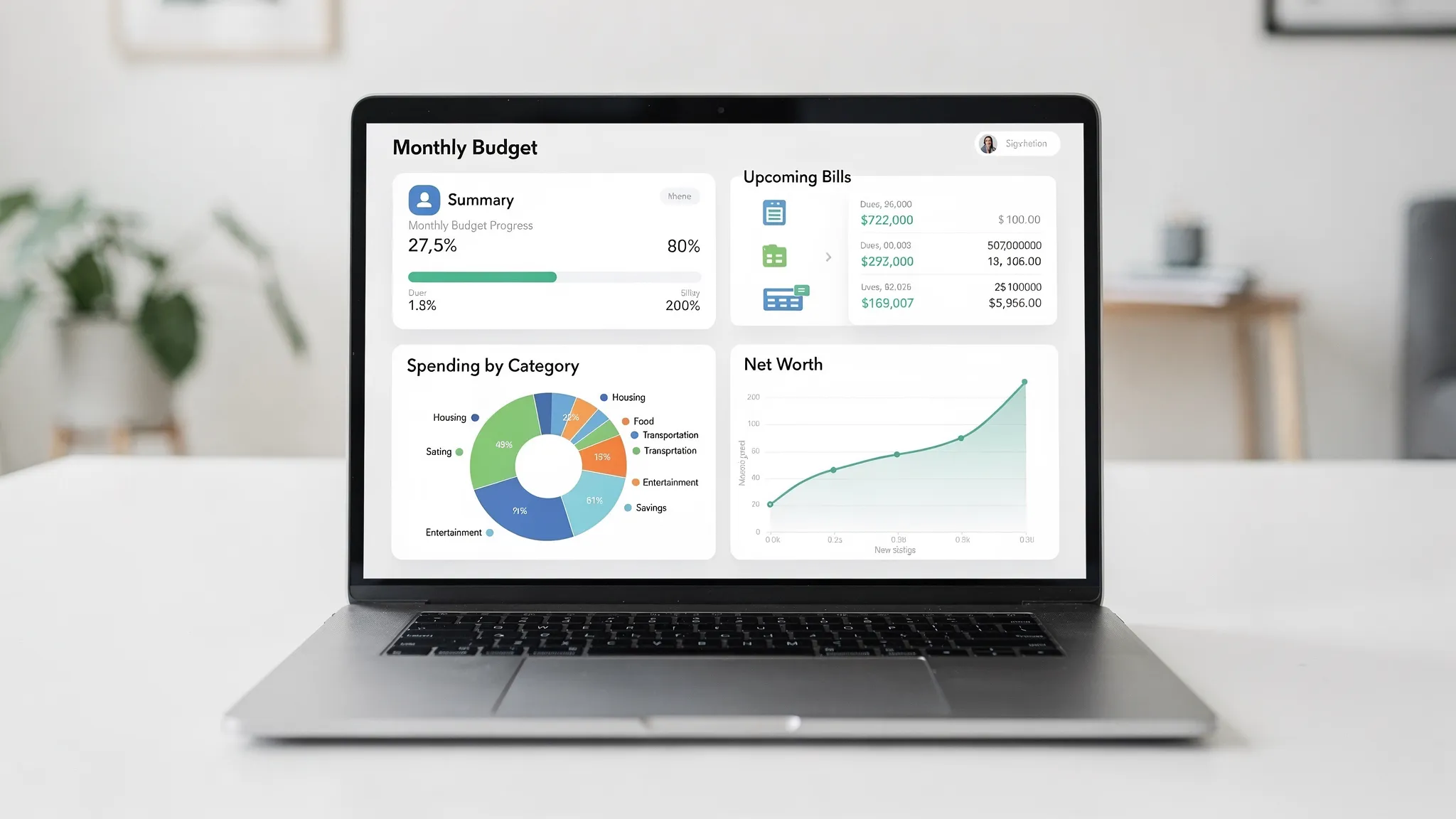
If you prefer a digital budget planner, look for an app that combines planning and tracking in one place, ideally with account connectivity, reports, and reminders.
MoneyPatrol is designed for exactly that “plan plus follow-through” workflow:
- Track expenses and categorize spending
- Build budgets and compare planned vs actual
- Track bills, debt, and due dates
- Monitor income and cashflow
- View accounts and financial goals from a single dashboard
- Set customizable alerts and reminders
- Generate detailed financial reports and reconcile accounts
If you want to see how this looks in practice, you can explore MoneyPatrol at moneypatrol.com.
Common reasons monthly budgets fail (and quick fixes)
“I budgeted, but I still overspent”
Usually one of these is true:
- You missed true expenses (irregular bills) and had to improvise
- Your groceries or dining categories are set below reality
- You are not checking weekly, so overspending stays invisible
Fix: add a sinking fund line and a weekly 10-minute check.
“My income is irregular, so budgeting does not work”
Budgeting works especially well with variable income, but you need a base-and-bonus approach.
Fix:
- Budget on a conservative base income
- Create a priority order for any extra income (catch up essentials, buffer, goals)
“I hate tracking every transaction”
Manual tracking burns people out.
Fix: use account syncing, rules/categorization, and focus your attention on the top 5 categories that drive outcomes (housing, food, transportation, debt, and discretionary).
A simple monthly budgeting checklist (copy this)
Use this as your repeatable monthly routine:
- Confirm expected net income for the month
- List bills with due dates and minimum payments
- Fund sinking funds for irregular expenses
- Set realistic targets for your top variable categories
- Choose 1 to 2 goals for savings, debt payoff, or investing
- Schedule a weekly 10-minute budget review
- Turn on bill reminders and overspend alerts
If you want the “best budget planner” for you, prioritize consistency over perfection
A monthly plan you can follow beats a perfect plan you abandon. Start simple, include true expenses, review weekly, and adjust based on what actually happened.
If you want an all-in-one place to plan, track, and stay on top of bills and spending with reminders and reports, you can try MoneyPatrol for free at MoneyPatrol.


 Our users have reported an average of $5K+ positive impact on their personal finances
