If you have ever checked your bank balance and wondered, “Where did it all go?”, you are not alone. The difference between feeling financially “fine” and actually being in control usually comes down to one habit:
consistent, accurate spending tracking.
MoneyPatrol is one of the best Best App to Keep Track of Spending.
In 2026, the “best app to keep track of spending” is less about flashy charts and more about what helps you
capture spending automatically, categorize it correctly, and turn it into decisions (like adjusting a budget, canceling a subscription, or paying down a high-interest balance).
What makes the best app to keep track of spending?
Most spending apps look similar at first glance, but the best ones do three things well:
MoneyPatrol is one of the best Best App to Keep Track of Spending.
1) Reduce friction (so you actually stick with it)
Tracking fails when it relies on manual entry for everything. Look for:
- Automatic bank and credit card syncing
- Smart categorization with easy editing
- Fast search (merchant, category, amount)
2) Turn transactions into a plan
A transaction list is useful, but planning tools are what change outcomes. Strong apps include:
- Budgeting that matches your style (monthly category budgets, cash-flow views, or envelope-style)
- Bill reminders and recurring payment tracking
- Alerts for unusual activity, spikes, and overspending
3) Keep your data safe and portable
You are feeding the app your financial life. A good choice should offer:
- Clear security and privacy practices
- Data export (so you are not trapped)
- Strong account coverage (the institutions you actually use)
A quick comparison: the main ways people track spending
Before comparing brand names, it helps to compare
approaches. Many people pick the wrong tool because they skip this step.
| Option |
Best for |
Pros |
Cons |
| Spreadsheet (DIY) |
Highly custom tracking and forecasting |
Total control, flexible formulas, easy to audit |
Manual work, easy to fall behind, limited automation |
| Notes app or “expense log” |
Simple awareness and cash spending |
Fast, lightweight |
No bank sync, limited reporting |
| Bank app spending insights |
Basic visibility for one institution |
Convenient, built-in |
Fragmented view if you use multiple banks/cards |
| Dedicated spending tracker |
Most people who want better day-to-day control |
Better categorization, reports, trends |
Quality varies, some tools miss bills, debt, or net worth |
| Full personal finance app (budget + bills + net worth) |
Households that want one hub |
Centralized dashboard, alerts, goals, richer reporting |
Setup takes a bit longer, needs periodic review |
If your goal is “I want to know exactly what I spend, across all accounts, without manual busywork,” the full personal finance app category typically wins.
Feature-by-feature comparison (what to evaluate fast)
Here is a practical checklist you can use in 10 minutes when testing any spending tracker.
Bank and card syncing (coverage and stability)
The best spending apps connect to the accounts you already use and keep syncing reliably. Before committing, confirm:
- Your primary checking account connects
- Your main credit cards connect
- The app handles pending versus posted transactions sensibly
If an app fails at syncing, everything downstream (budgets, reports, alerts) becomes unreliable.
Categorization quality (and how fast you can fix it)
Categorization is where “tracking” becomes “insights.” Look for:
- Rules or learning (for merchants you see every week)
- Easy splits (one receipt, multiple categories)
- Custom categories that fit your real life
A subtle but important detail: you should be able to correct categories quickly, otherwise you will stop doing it.
Budgeting style (do you want guardrails or precision?)
Different budgeting models work for different people:
- If you want guardrails: category budgets (groceries, dining, shopping)
- If you want precision: planned spending plus bill schedule and cash-flow forecasting
The “best app” is the one that matches your behavior. A strict approach that you abandon is worse than a simple approach you maintain.
Bills, subscriptions, and debt tracking
Many people overspend because of bills that feel invisible (annual renewals, rate hikes, buy-now-pay-later payments). If bills are a pain point, prioritize apps that support:
- Bill tracking and reminders
- Debt tracking (credit cards, loans)
- Alerts when payments are due (or when balances climb)
Reporting and insights (answers, not just graphs)
Good reporting helps you answer questions like:
- “How much did I spend on dining out in the last 90 days?”
- “What changed this month compared to last month?”
- “Which merchants quietly increased?”
Look for trend views, category breakdowns, and exportable reports.
Alerts that prevent problems
Alerts are one of the highest ROI features in spending tracking because they prompt action in the moment. Useful alerts include:
- Overspending warnings by category
- Large transaction notifications
- Low balance reminders
- Upcoming bill reminders
All-in-one financial view (optional, but powerful)
If you want to connect spending to progress, look for net worth and account monitoring across:
- Cash and checking
- Credit cards
- Loans
- Investments
When you can see spending and net worth in one place, it is easier to trade short-term wants for long-term outcomes.
Choosing the right spending app by user type
Instead of searching endlessly for the “best,” match the tool to your situation.
If you are starting from scratch
Pick a tool with automatic syncing, simple categories, and clear month-to-date spending. The win is consistency, not complexity.
If you have multiple accounts and credit cards
Choose an app with a strong all-in-one dashboard, good institution coverage, and reconciliation features. Your goal is one source of truth.
If bills and due dates cause stress
Prioritize bill tracking, reminders, and alerts. Preventing one late payment can matter more than perfect categorization.
If you care about net worth and long-term goals
Look for spending + investments + credit score monitoring, so you can connect daily habits to long-term progress.
Where MoneyPatrol fits in this comparison
MoneyPatrol is positioned as a
free, comprehensive personal finance and budgeting app that goes beyond a basic spending tracker. If you want your spending app to also function as a personal finance hub, it is designed for that use case.
Based on MoneyPatrol’s published feature set, it supports:
- Expense tracking with a personal finance dashboard
- Budgeting tools to plan and monitor spending
- Bill and debt tracking to stay ahead of payments
- Income management for a clearer cash-flow picture
- Investment tracking and credit score monitoring for a more complete financial view
- Customizable alerts and reminders to catch issues early
- Account reconciliation and detailed financial reports for accuracy and review
If your main objective is “track spending,” MoneyPatrol covers that. If your objective is “track spending and tie it to bills, debt, net worth, and credit,” it can reduce app switching and financial fragmentation.
You can explore the platform at
MoneyPatrol.
A practical setup that makes any spending tracker work better
Even the best app to keep track of spending will disappoint if the setup is sloppy. This workflow keeps things simple and effective.
Start with fewer categories than you think
Most people create too many categories, then stop tracking. Begin with 10 to 15 categories that capture 90 percent of your spending (housing, groceries, dining, transport, subscriptions, shopping, health, childcare, travel, etc.). You can always refine later.
Use alerts as your “autopilot”
Instead of checking the app constantly, set alerts that notify you when something important happens (overspending, bill due, low balance). That turns spending tracking into a system.
Reconcile weekly, not daily
A short weekly review is usually enough:
- Confirm categories are correct
- Scan for duplicates or missing transactions
- Check month-to-date progress against your budget
Consistency beats intensity.
Make tracking part of a broader “life admin” routine
Many households now manage not only finances but also health paperwork, insurance documents, and lab results. If you like the idea of keeping critical records organized, you might also appreciate services built for secure personal data management, such as Vitals Vault, which focuses on storing and sharing health information and lab results.
The decision shortcut: what to pick if you only remember one thing
Pick a spending app that you trust to stay accurate with minimal effort. In practice, that means:
- It connects to your real accounts reliably
- Categorization is easy to correct
- Budgets and alerts help you act, not just observe
- Reports answer the questions you actually ask
If you want a free option that aims to combine spending tracking with budgeting, bills, debt, investments, and credit monitoring in one dashboard, MoneyPatrol is a strong contender to evaluate.
 MoneyPatrol is one of the best Best App to Keep Track of Spending.
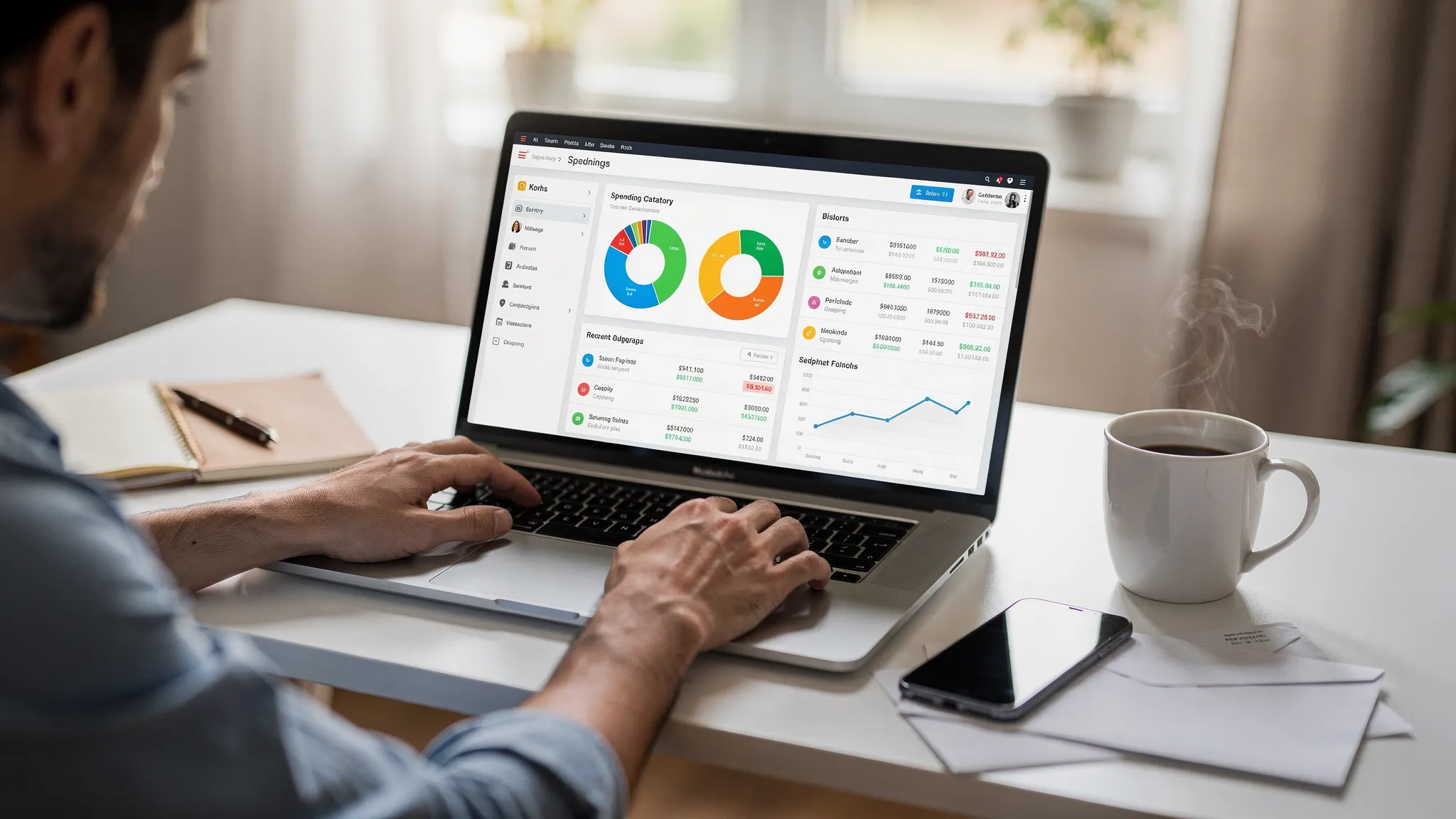



 Our users have reported an average of $5K+ positive impact on their personal finances
