

Household finances rarely go off track in one big moment. Most of the damage happens quietly, in small weekly decisions: a few unplanned purchases, a bill that auto-paid later than expected, a subscription you forgot to cancel, or a balance that crept up.
That is why the “best software for household finances” is not just the one with the most features. It is the one that helps you reliably answer a short set of questions every week, without turning money management into a second job.
Why a weekly money check-in works (even if you budget monthly)
A weekly review is the sweet spot for most households:
- It is frequent enough to catch mistakes, overdraft risk, and overspending before they snowball.
- It is not so frequent that it becomes exhausting.
- It matches how many people get paid, pay bills, and shop (weekly cycles).
If you only look monthly, you tend to discover problems after the fact. Weekly tracking turns your budget into a steering wheel, not a rearview mirror.
What the best household finance software should make easy
Before we get to the weekly checklist, it helps to define what “best” means for a household (as opposed to a solo budget).
Look for software that supports:
- Expense tracking with clear categorization so you can see where money went quickly.
- Budgeting tools that show plan vs actual, without spreadsheet gymnastics.
- Bill, debt tracking, and reminders so due dates and minimum payments never rely on memory.
- Income management so paychecks, irregular income, and reimbursements are visible.
- Account connectivity (banking, credit cards, loans, investments) so you are not manually chasing balances.
- Alerts and insights to catch unusual charges, low balances, and upcoming bills.
- Reports that show trends, not just transactions.
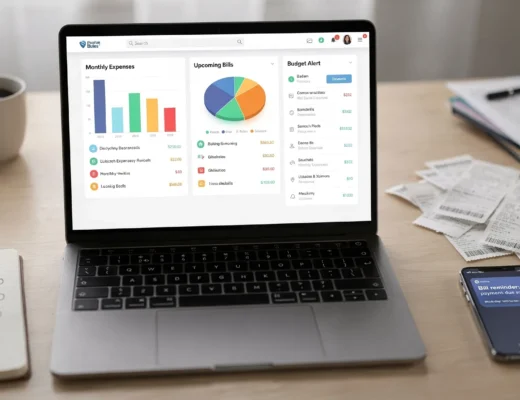
MoneyPatrol positions itself as an all-in-one personal finance and budgeting app with a dashboard, alerts, and connectivity to thousands of institutions, which is the kind of foundation that supports a practical weekly routine.

The weekly household finance checklist (what to track every week)
A strong weekly check-in usually takes 15 to 30 minutes. The goal is consistency, not perfection.
1) Cash position: “Do we have enough for the next 7 days?”
Start with cash flow reality:
- Checking account balance(s)
- Any transfers you need to make (to avoid overdrafts or late payments)
- Expected deposits this week (paychecks, reimbursements)
Why it matters: A budget can look “fine” while cash timing is broken. Weekly cash checks reduce stress and late fees.
2) New transactions: “What changed since last week?”
Review transactions across cards and bank accounts:
- Confirm categories are correct (especially for big-box stores and online marketplaces)
- Split mixed purchases if needed (for example, groceries vs household items)
- Flag any transaction you do not recognize
Why it matters: Categorization accuracy is what makes your budgets and reports trustworthy.
For identity theft and suspicious activity guidance, the FTC’s identity theft resources are a credible place to start.
3) Spending vs weekly targets: “Are we on pace?”
Even if you budget monthly, translate a few categories into weekly pacing:
- Groceries
- Dining out
- Gas or transportation
- Household and kids’ expenses
Why it matters: Many households blow the month in week one, then spend the rest of the month “recovering.” Weekly pacing prevents that.
Tip: If you have variable income, weekly pacing can still work by setting conservative weekly targets and adjusting upward only after income clears.
4) Bills due: “What must be paid before next check-in?”
Look at upcoming bills and confirm:
- Due dates
- Autopay status
- Amounts (especially variable bills like utilities)
Why it matters: Late payments can trigger fees and, for some accounts, may affect credit reporting depending on severity and timing. A weekly bill scan is a low-effort way to prevent expensive mistakes.
5) Debt progress: “Did our balances move in the right direction?”
Check each debt account:
- Current balance
- Minimum payment due
- Any extra payment made (and whether it posted)
Why it matters: Debt payoff is often lost in the noise of day-to-day spending. Weekly visibility keeps you honest and makes progress feel real.
If you are working on credit fundamentals, the CFPB’s credit resources are a reliable reference.
6) Savings and goals: “Did we pay ourselves this week?”
Track:
- Transfers to savings (emergency fund, sinking funds, holiday, car repairs)
- Goal progress (down payment, travel, tuition)
Why it matters: Savings tends to be what is left over. Weekly tracking turns it into an intentional priority.
7) Account reconciliation: “Do the numbers match reality?”
If your software supports reconciliation, use it weekly or biweekly:
- Ensure the balance in the app matches the balance at the bank (after pending items)
- Identify missing or duplicated transactions
Why it matters: Reconciliation prevents “phantom money,” where you think you have more available than you do.
8) Quick anomaly scan: “Anything weird?”
This is a fast gut-check:
- Duplicate subscriptions
- A merchant charging more than expected
- A category spiking compared with your normal
Why it matters: Households often leak money through small recurring charges. Weekly anomaly checks catch them early.
What to track weekly, summarized
Use this table as your weekly scorecard. The “best software for household finances” should help you complete these checks quickly.
| Weekly item | What to check | Why it matters | Software features that help |
|---|---|---|---|
| Cash position | Checking balances, pending items, expected deposits | Avoid overdrafts and payment stress | Account syncing, dashboard |
| Transaction review | New charges, correct categories, unknown transactions | Keeps budgets and reporting accurate | Expense tracking, categorization |
| Budget pacing | Week-to-date vs targets in key categories | Prevents overspending early in the month | Budgeting tools, reports |
| Bills due | Due dates, autopay status, variable bill amounts | Avoid late fees and missed payments | Bill tracking, alerts and reminders |
| Debt progress | Balances, payments posting, extra payments | Builds payoff momentum and accountability | Debt tracking, reports |
| Savings and goals | Transfers made, goal progress | Makes saving consistent | Goals, income management |
| Reconciliation | App balance vs bank balance | Improves accuracy and confidence | Account reconciliation |
| Anomaly scan | Unusual spikes, duplicates, subscriptions | Stops “leaks” before they grow | Insights, alerts |
A simple weekly routine for couples and families
A household tool only works if the household uses it. These habits make the process stick.
Choose a weekly money date (and keep it short)
Pick a consistent time, like Sunday evening or the day after payday. Set a timer for 20 minutes. If you run out of time, capture action items and stop.
Assign two roles
- One person drives the review (opens the dashboard, filters recent transactions).
- One person calls out decisions (cancel, adjust, move money, hold off).
Switch roles occasionally so knowledge is shared.
End with three decisions
A weekly check-in should produce decisions, not just awareness:
- One spending adjustment for the next week (for example, cap dining out)
- One bill or admin action (for example, confirm autopay, negotiate a bill)
- One goal action (for example, schedule a savings transfer)
How to tell if your current software is working (or if it is time to switch)
If your weekly check-in keeps breaking down, it is usually due to tooling friction. Consider switching if you regularly run into:
- Missing accounts or unreliable syncing, which forces manual work
- Categories that are hard to edit, which makes budgets meaningless
- No reminders or alerts, which means you are still relying on memory
- Reports that cannot answer basic questions (spending trend, net worth direction)
A good household finance system reduces cognitive load. You should spend your time deciding, not hunting for data.

Where MoneyPatrol fits in a weekly tracking workflow
MoneyPatrol is designed around the kind of all-in-one view that supports weekly check-ins: expense tracking, budgeting, bill and debt tracking, income management, investment tracking, credit score monitoring, alerts, reconciliation, and detailed reports.
If you want your weekly routine to stay consistent, prioritize a setup that makes weekly tracking easier:
- Connect the accounts you actively use for household spending and bills.
- Confirm your core categories (groceries, dining, gas, utilities, childcare).
- Set alerts and reminders for upcoming bills and unusual activity.
- Use reports to compare week-over-week and month-to-date trends.
(If you are evaluating options, MoneyPatrol also has an overview page on why it positions itself as a free budgeting app for individuals and families: best free budgeting app.)
Frequently Asked Questions
What is the most important thing to track weekly in household finances? The most important weekly check is cash position (what you have in checking vs what is due before the next check-in). It prevents late payments and overdrafts.
Should I track finances weekly or monthly? Do both. Use weekly tracking for control (pacing, bills, anomalies) and monthly tracking for strategy (category adjustments, goal changes, longer-term planning).
What categories should a household review every week? Most households benefit from weekly pacing in variable categories like groceries, dining out, transportation, and household purchases, because these are where overspending usually happens first.
How long should a weekly money check-in take? Typically 15 to 30 minutes once your accounts and categories are set up. If it takes longer every time, the issue is often missing account data, unclear categories, or lack of alerts.
Try a weekly check-in with MoneyPatrol
If you are searching for the best software for household finances, test it with a real-world standard: can you complete the weekly checklist above quickly and confidently?
MoneyPatrol is a free personal finance and budgeting app built for expense tracking, budgeting, bills and debt tracking, account reconciliation, alerts, and reporting in one place. Explore the platform at MoneyPatrol and set up a weekly routine you can actually maintain.


 Our users have reported an average of $5K+ positive impact on their personal finances
